
Bookkeeping Cleanup Service. Name the day the books finish.
You came for a cleanup that ends. We match the books through a day you can name, set payroll up beside the provider you already pay, and hand you statements a lender can follow. Steven Palmieri, the Tax CFO, writes the day down before the work starts.
Name the oldest open month.
The oldest month still open.
 You will be talking to the Steven Palmieri practice.
A cleanup service catches up. A Tax CFO decides what the caught-up months say.
Matched books through a named day are the floor. The Tax CFO reads those months and tells you what they mean for the filed year you left alone, the October choices still open, and the first real estimate. The date is where the cleanup ends. The reading is where the planning starts.
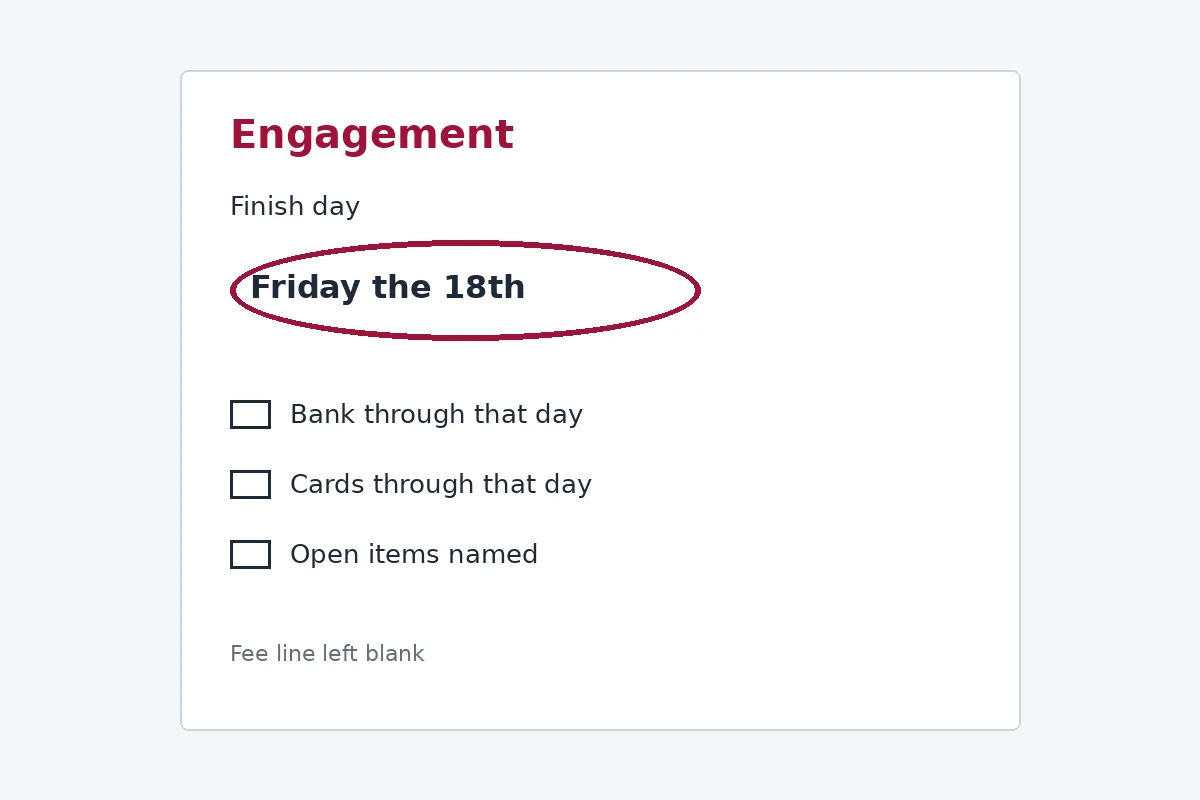
What the paper names
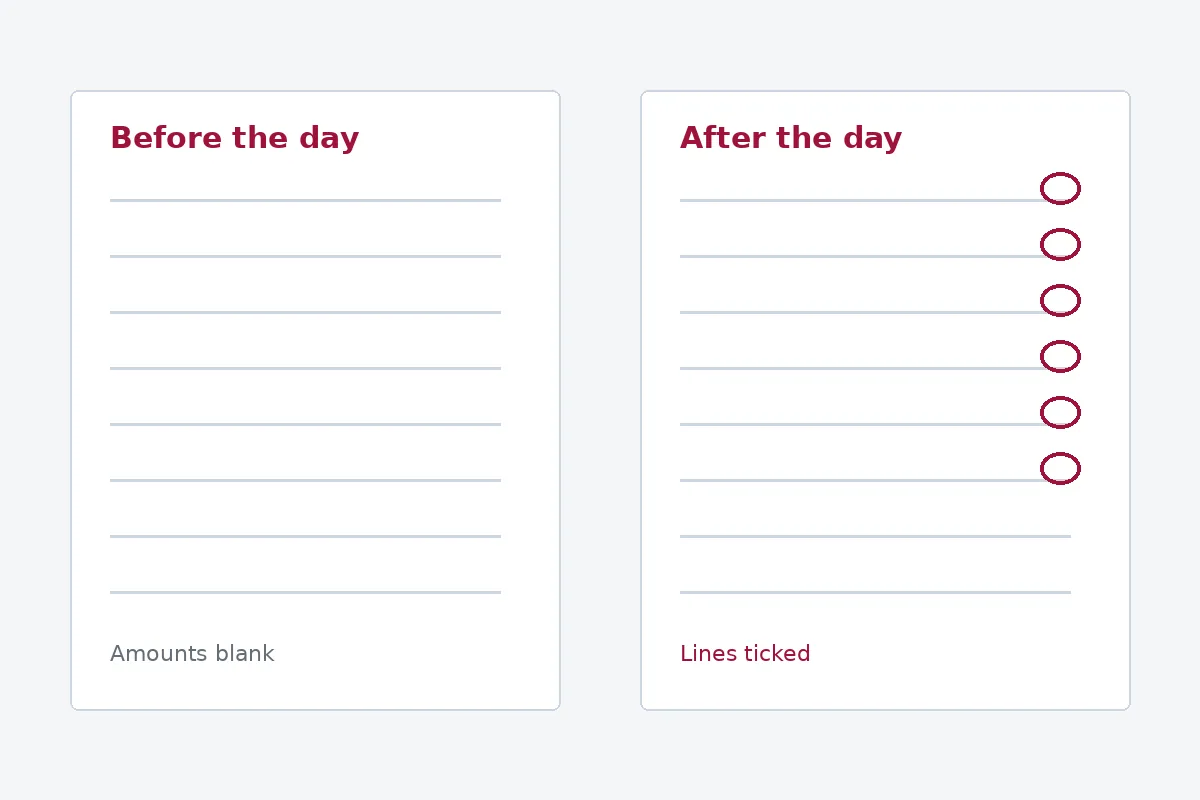
The page you sign names the day and the list of what current includes before anyone starts.
Click to read ›Tap to read ›
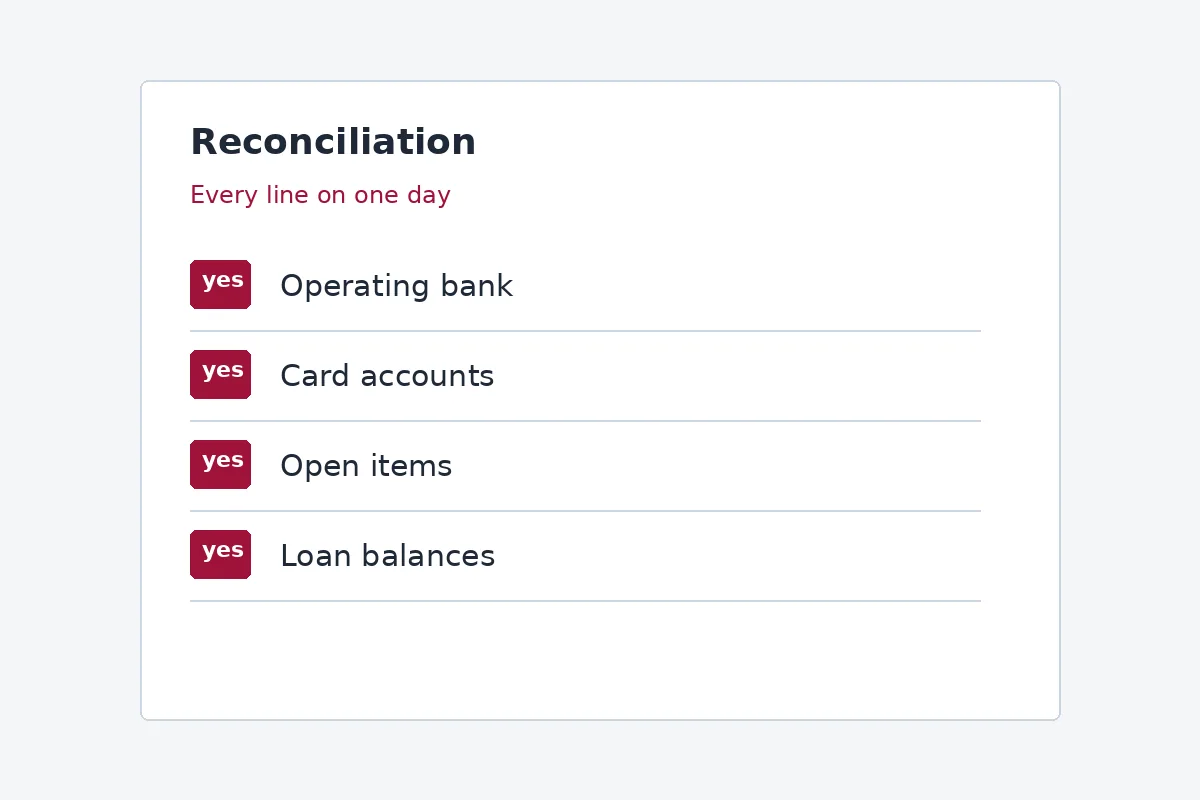
What current includes
Current means the bank, the cards and the open items are all true on one day. If any of them is not, the day has not arrived yet, and we say so.
Click to read ›Tap to read ›
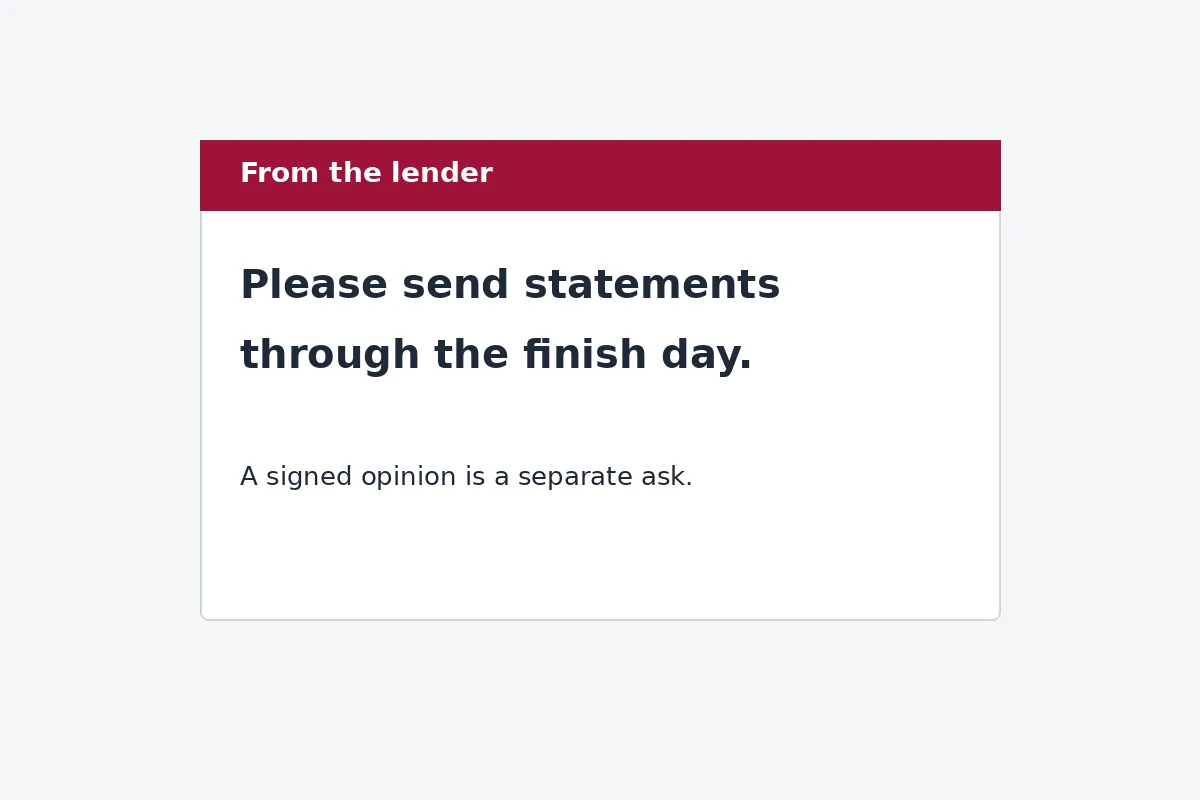
What stays outside
A signed opinion, the next month, and payday itself are not slipped into the day by silence.
Click to see ›Tap to see ›
A year already filed
A return that already went in is left alone, or it is listed as its own decision.
Click to read ›Tap to read ›
The month after
The cleanup ends on the named day. If you want the next month closed too, you ask in writing, and it becomes a monthly close, not a cleanup that never stopped.
Click to see ›Tap to see ›
October still moves
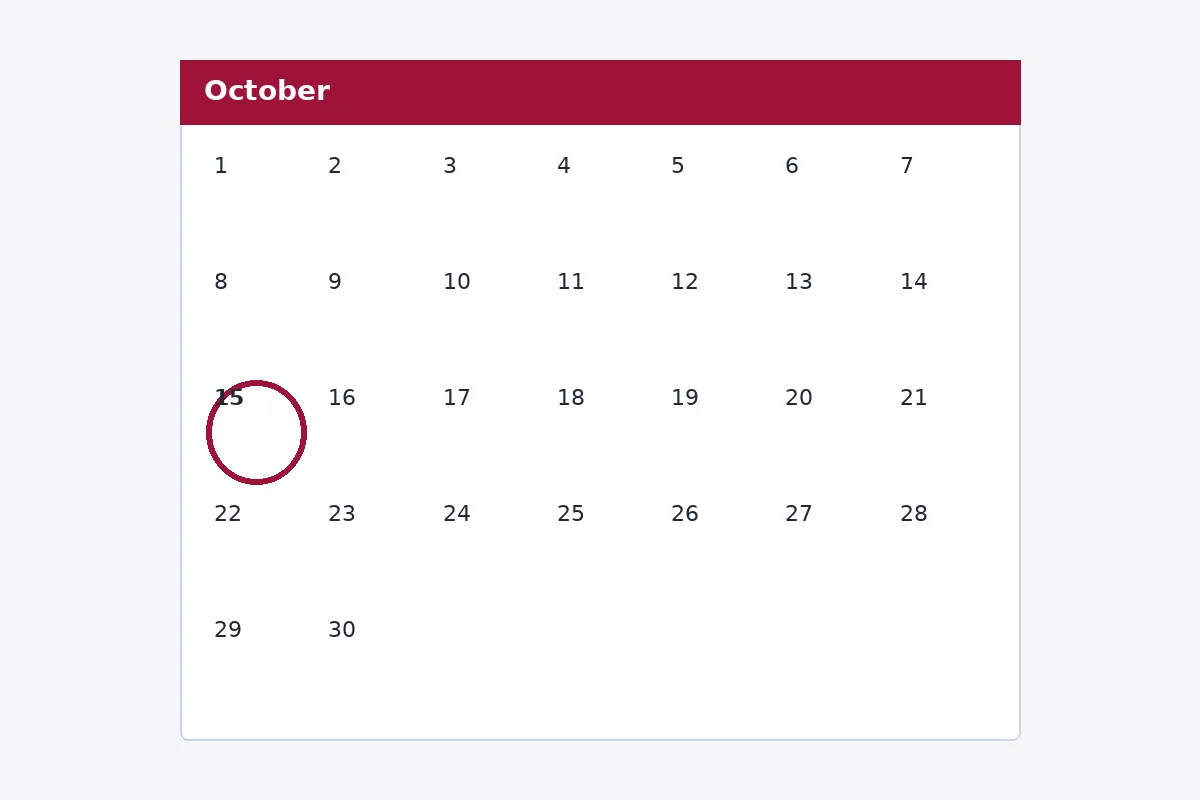
A day that lands in October still leaves room to choose equipment and what the books will say.
Click to read ›Tap to read ›
Six parts of the named day
Open one row. It says where that part of the cleanup sits.
The day itself
1The named day
This part belongs with the day we write down before the work starts.
We write the day before a month is matched. A promise with no day is not this row.
2October choices
This part belongs with the day we write down before the work starts.
A day that lands in October still leaves room to choose equipment and what the books will say.
What current includes
1The bank tie
This part is true only when the statement and the books meet on that day.
The statement ending and the book balance meet, and every difference is an item with a name.
2Open items named
This part is true only when the statement and the books meet on that day.
A clearing bucket is empty on that day, or each leftover item is written down instead of guessed.
What you still hold
1Statements you hold
This part stays in your hands, or with the provider who already runs payday.
You keep the statements from the oldest open month. A receipt for every purchase can wait until the statements are in.
2Payday with the provider
This part stays in your hands, or with the provider who already runs payday.
People are still paid on the provider calendar. We set the accounts up. We do not run payday.
Who does the work
Steven Palmieri is the Tax CFO on this work.
The same practice
Steven Palmieri is the Entrepreneur's CFO for an owner who wants the month and the return from the same practice. This practice keeps the books, the monthly close, and the return in the same hands.
Matched books, payroll set up beside the provider, and statements you can read are the three things the first screen promises. The rows below are how you open each part.
A service is a project with an end
Why the oldest month matters
People type the word service because they want something that finishes.
Open-ended help is a different offer. On this site the offer is a written day, a list of what has to be true on that day, and a straight answer if the day you hope for cannot hold the months that are still open.
Every later month stands on the oldest one that is still open. Everything after it depends on it. If March was never tied to the bank, April cannot be called finished, and neither can the day you circled in the fall. We ask for that month first because a day with no start is a slogan.
The first afternoon does not require a receipt for every line. You need the statements from that oldest month forward, and a name for who can open the file. The rest of the chase is the work, not the entrance fee.
What we will not call income
Cash the owner contributes is capital, not revenue. A loan coming in is not a sale. A transfer between two accounts the same company owns is not a sale. A cleanup that posts all three as revenue makes a year look busy and makes the return wrong. We name the deposit for what it was.
Uncashed checks get the same kind of attention. A check that never cleared is not a decoration on a reconciliation. It is a question. Void it, reissue it, or leave it with a written reason. On the named day the question has an answer, or the item is still on the list.
The return waits for the day
A return built on a month that has not met the bank is a guess with a signature line. We will not do that. Either the day is real and the return can use it, or we say the return should wait. That sentence is part of the help, including the day we tell you the months are few and already matched and the service is unnecessary.
Bring the oldest month
What we say back
The oldest month still open, and the day you need. One sentence is enough to start. We will say whether that day is honest. It says where that part of the cleanup sits, the same way the closed rows on the device do.
I want a day the books are actually done. Here is the oldest month I know about.
Tell us the oldest open month.
You will be talking to the Steven Palmieri practice.