A sketch
A Finish Date a shape with the amounts left off
Seven open months and a Friday that is too close is a shape you have seen. This shop is invented. No client sits behind it, and no town is named. The sequence is the only thing worth copying.
The invented shop
Picture a small shop that sells goods and takes card payments. One owner. A payroll provider already runs Friday. Seven months have not been tied to the bank. The owner has been told, more than once, that the books are basically current. The owner does not believe it, and is right not to.
The shop and the owner are invented for the example. A familiar sequence only means the sequence is common. It does not mean the paragraph is about you. Amounts are left blank on purpose. A blank cannot be mistaken for your balance.
The day someone hopes for
The owner wants the books current on the last Friday of next month, because a preparer asked for something usable before a planning conversation. Seven open months and a Friday that close is the moment we say the day is probably a wish. We do not decorate the wish. We count.
The honest rewrite might be a later Friday, or a shorter list. Current for the bank and the cards, with two loan accounts named as still open. Or a day next month that a preparer can truly use, and a frank note to the preparer about what will not be ready. Both rewrites are better than a promise that fails on Thursday.
What the blank page shows
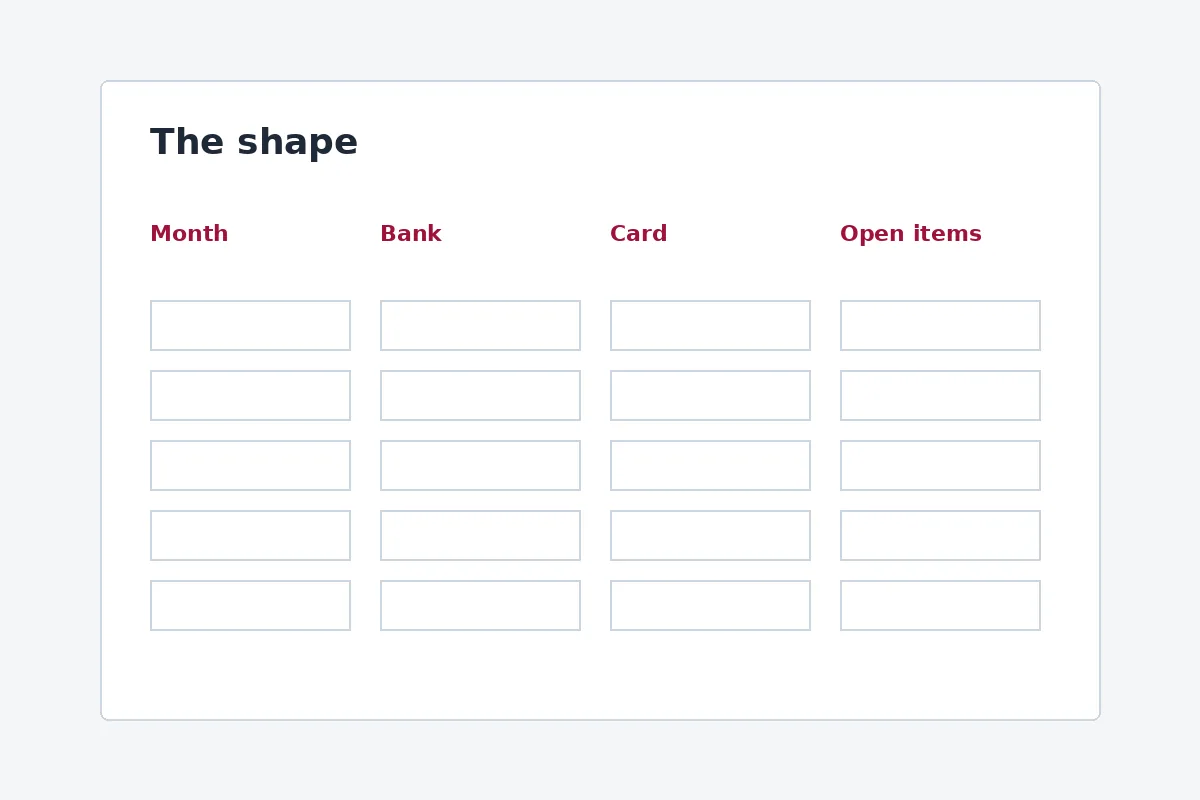
A column for the month. A column for the bank, tied or not. A column for the card. A column for open items, named or empty. A line at the bottom for the filed year, left alone or listed. A line for the yearly report, included or still open. No dollars. The shape is the lesson.
When your own months drop into that shape, the dollars stay yours. We still do not print them on a public page. The sketch only teaches the order. Oldest month first. Ties before opinions. The day last, when the rows can support it.
What you should steal from it
Steal the order and the blanks. Do not steal a timeline. Your count is your count. If you have two open months, your Friday may be honest when this invented shop's Friday is not. If you have a year and a half, even a generous Friday is a conversation about what to leave outside.
Bring your oldest month and your hoped-for day. We will set them next to each other and tell you which one has to move. The comparison is the only job of the example.
Keep reading
Set your month next to a day.
I want to see whether my months can hold the day I hoped for.
 You will be talking to the Steven Palmieri practice.